BOOKS


JEWELRY
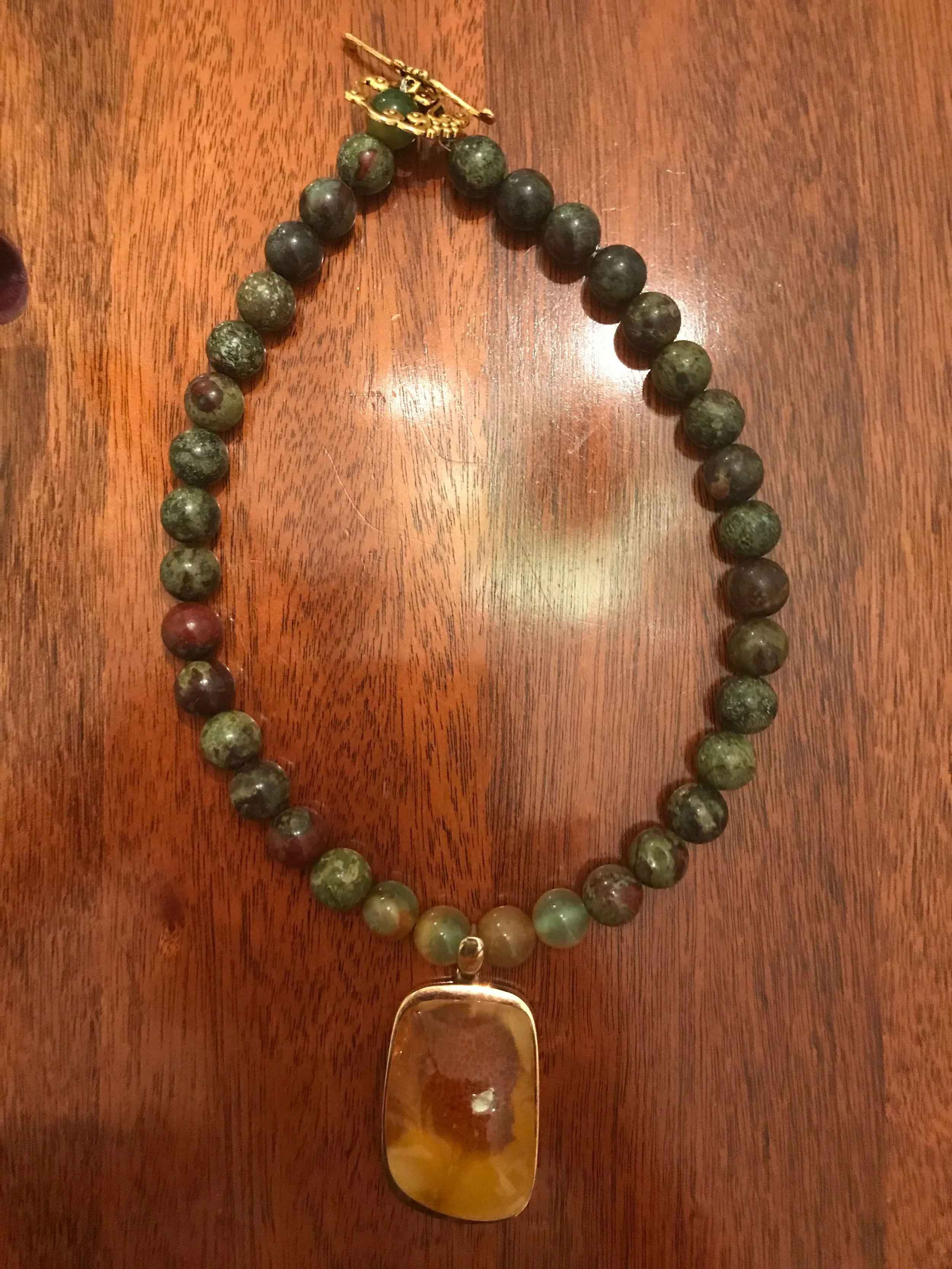
I created this piece using Malachite and Amber. Malachite, primarily used for jewelry, lapidary work, and decorative objects, was first employed as a green pigment in paints and cosmetics. It is often referred to as “the Stone of Transformation,” and serves as a powerful spiritual tool for deep energy cleansing. It is associated with the heart chakra, and encourages emotional, physical, and spiritual renewal. I purchased this pendant, known as Baltic Amber, while in Poland. It is a time-capsule of fossilized tree resin which takes 40-60 million years to form. Pieces containing preserved insects or plants are rare and very expensive. (Unfortunately, mine contains no insects!) Historically, it was used as an aumlet to ward off negative energy, or carried to create a protective barrier against emotional or energetic harm. Frequently referred to as “liquid sunlight,” it is used to boost sagging energy, enhance joy, and increase the wearer’s confidence. It assists in the healing of deep-seated trauma and encourages emotional balance and calmness.
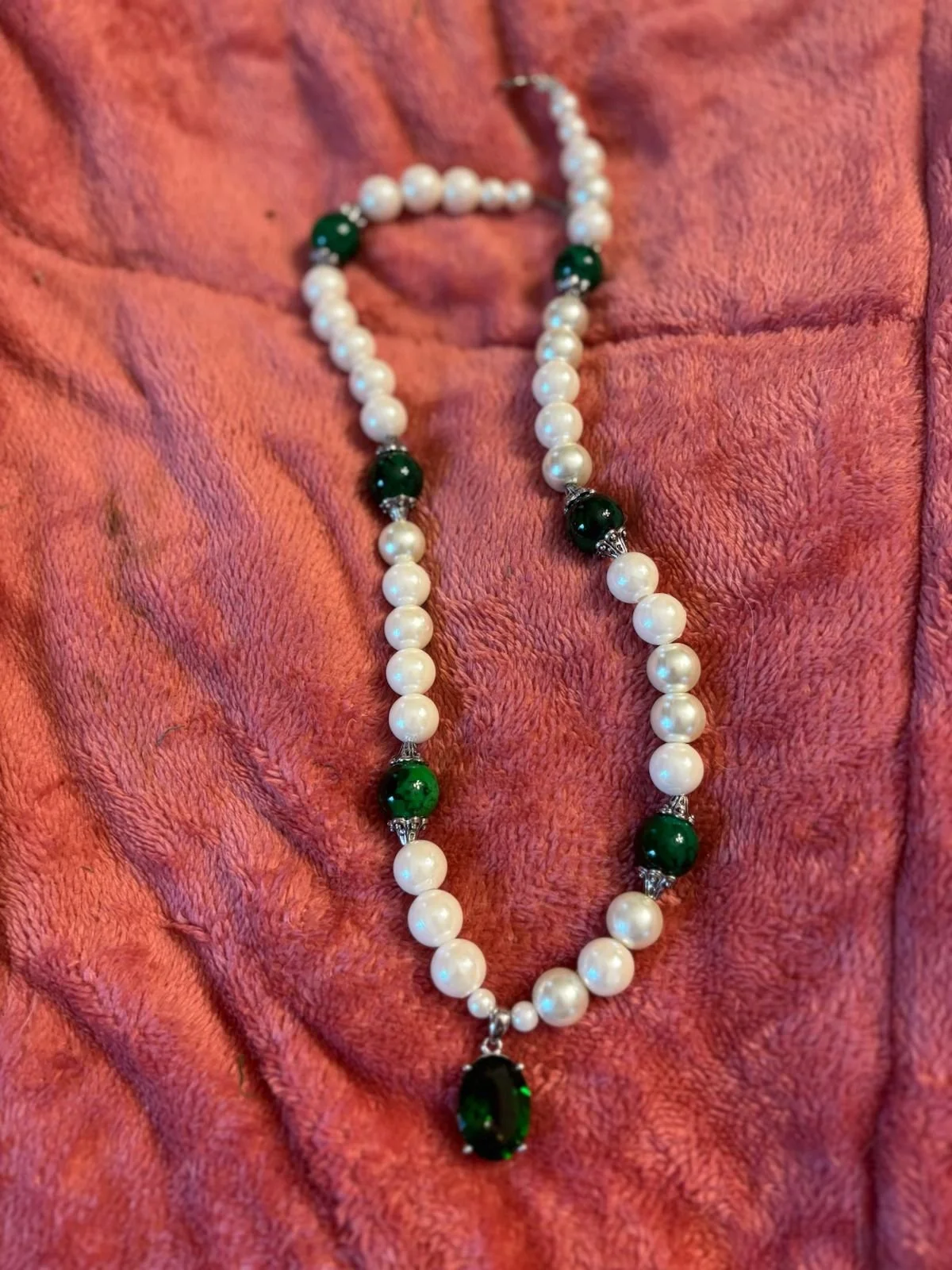
Designing jewelry with natural or created stones is both a avocation and a passion. This necklace features faux pearls and glass beads, with the “star of the show” a Helenite, a man-made stone witch was first created accidentally following the 1980 eruption of Mount St. Helens in the state of Washington. It is made by heating rock dust and particles from the Mount St. Helens area in a furnace to a temperature of approximately 2,700°F. Helenite is also known as Mount St. Helens Obsidian. Known as the “Gaia Stone,” it is used to connect with nature spirits, fostering a deeper, loving connection to Mother Earth. It is believed to help alleviate anger, relieve stress, and heal emotional trauma. This beautiful stone was gifted to my mom, Miss Madeline, by her beloved grandson, Jason.
RUGS AND QUILTS
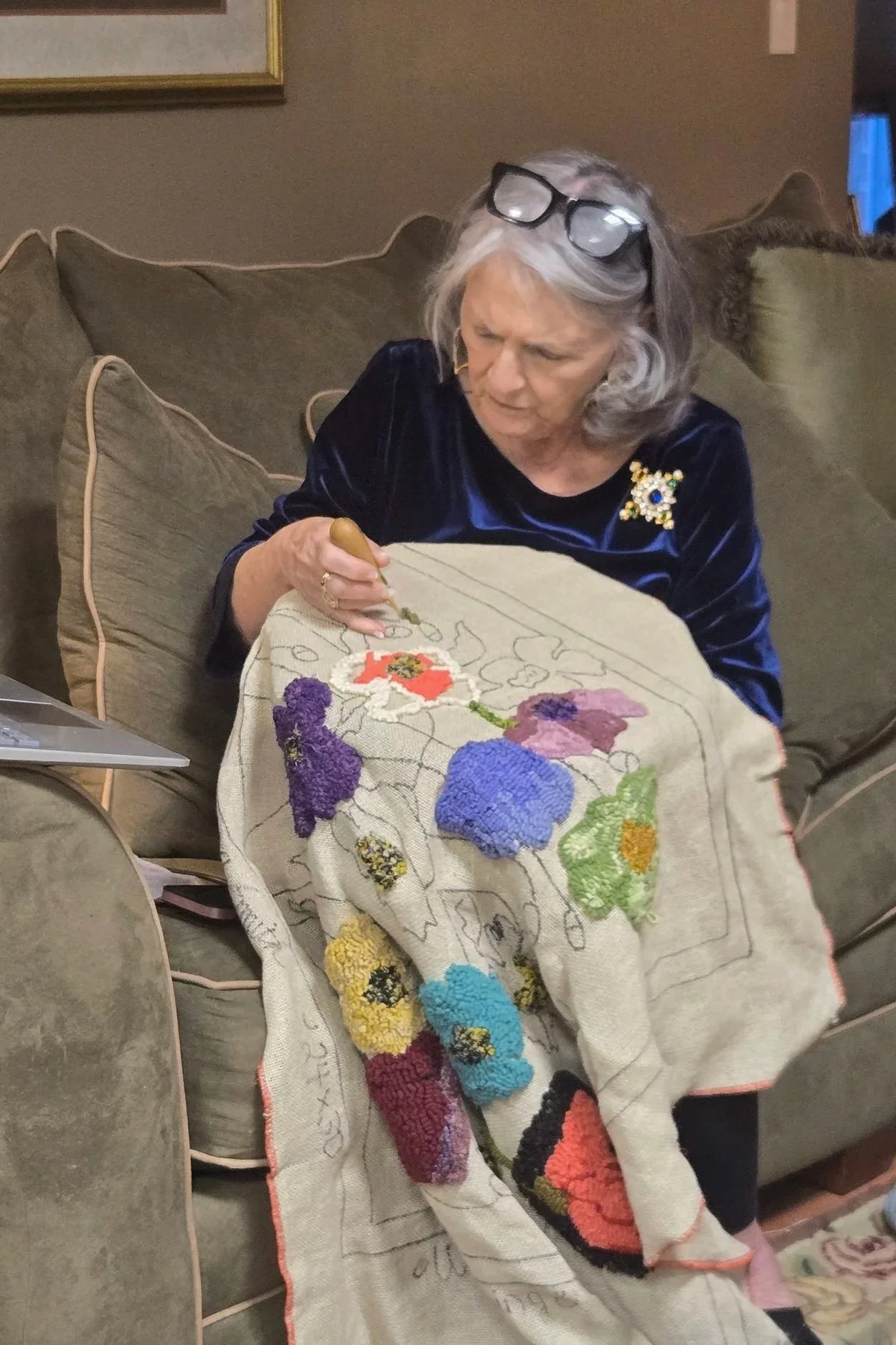
My Mississippi cousin, Jane, introduced me to “rug hooking,” which became popular between 1830 and 1850 in first Nova Scotia, then Maine. It was initially known as a “craft of poverty,” as wool scraps were used to create much-needed floor coverings to ward off Winter’s chill. While a true neophyte to the handiwork, I’ve enjoyed improving my skills by rubbing elbows with Canadian and American “professionals” in the field (their work is astounding), and look forward to once again attending the Caraway Rug School in Sophia, N.C., hosted by the extraordinary Lisanne Miller of “P Is for Primitive,” Kennebunk, Maine.
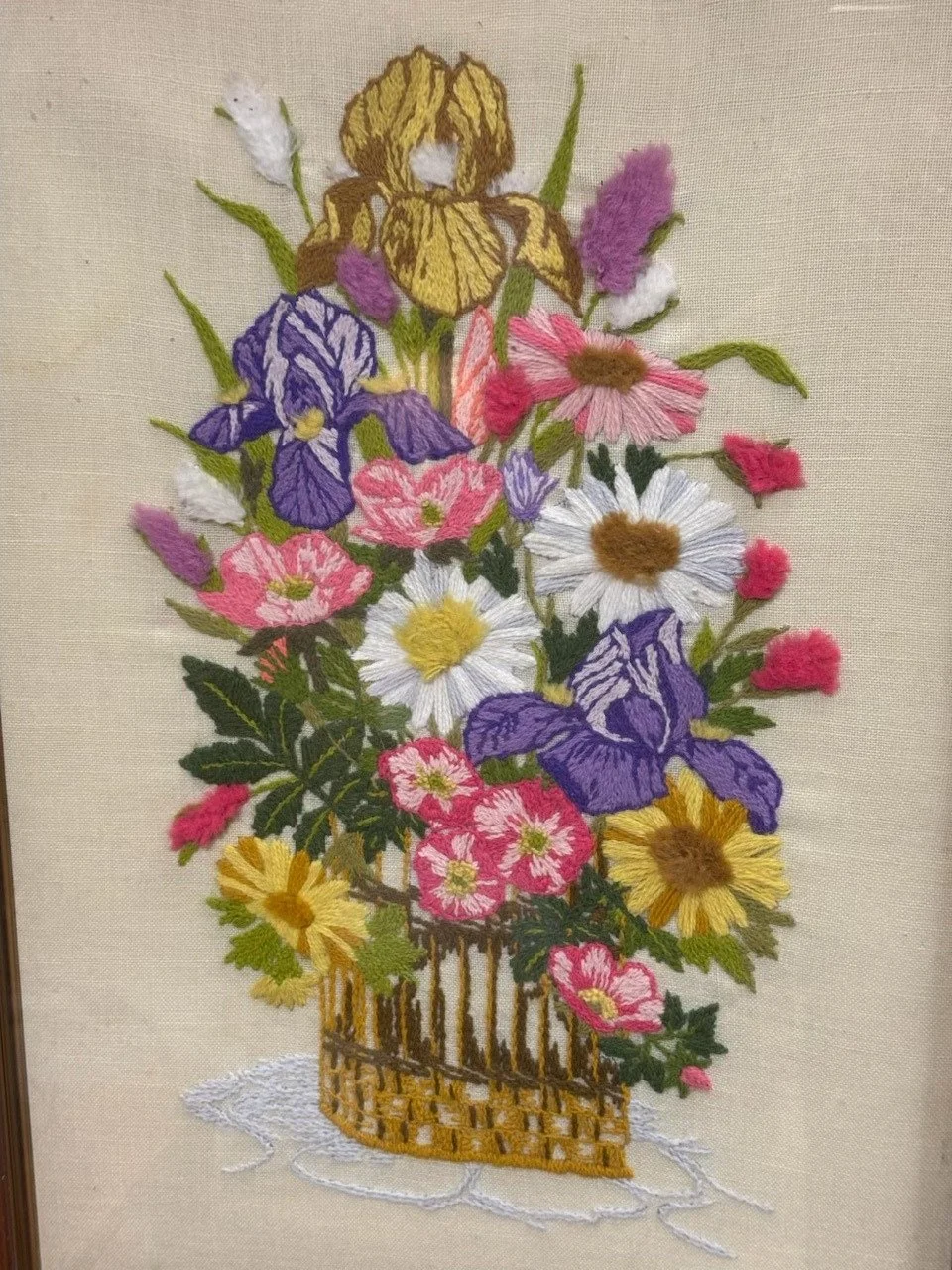
Crewel work is a style of embroidery using a thick worsted wool year, “crewel” being the old Welsh word for wool yarn. The oldest known example of crewel work is the Bayeux Tapestry, which is so impressive it has its own museum. Dating back to 1077, the approximately 229 ft tapestry depicts the events leading up to the Battle of Hastings, when William the Conqueror defeated the English army to become the first Norman king of England. In the mid-1500’s, Queen Elizabeth I, an accomplished stitcher, established the “Keepers or Wardens and Company of the Arte and Mystery of the Broderers of the City of London,” an embroidery guild run entirely by men, whose purpose was to establish the rules and standards for high quality crewel work. I completed this 18” x 30” piece in the 1980’s as a Christmas gift for my mom.
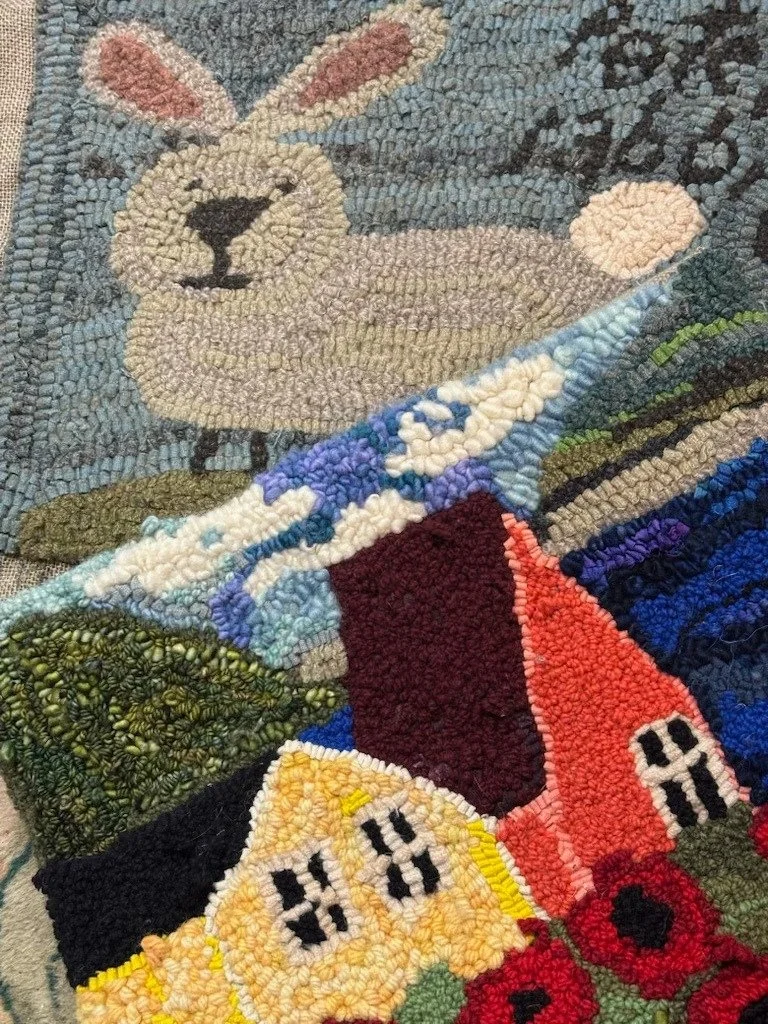
Two hooked pieces which will one day (I hope) be sewn into pillows.
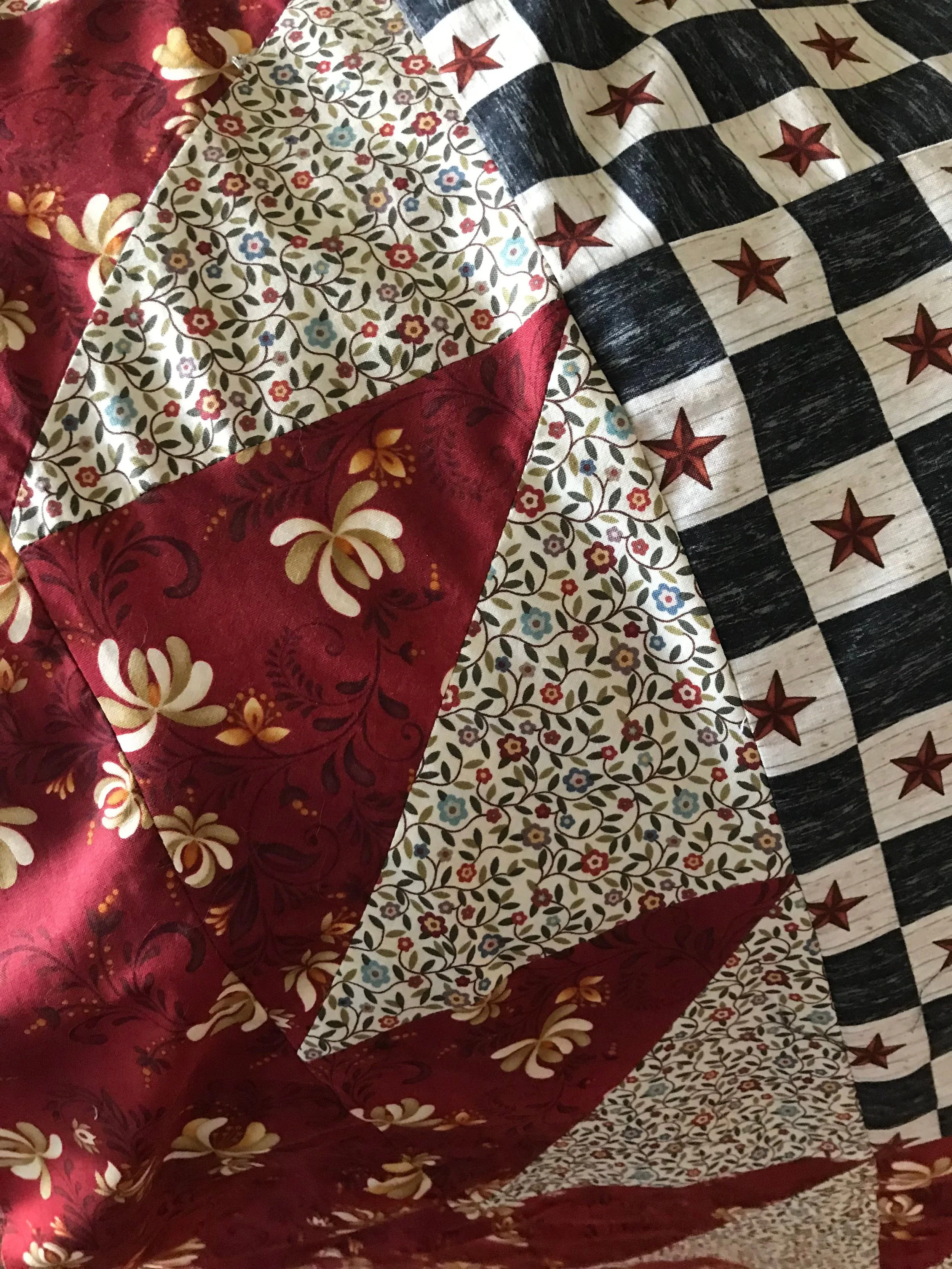
These are my most recent quilting projects,